The Sale Isn’t Done Until It’s Delivered: A Guide to FMCG Last-Mile Delivery
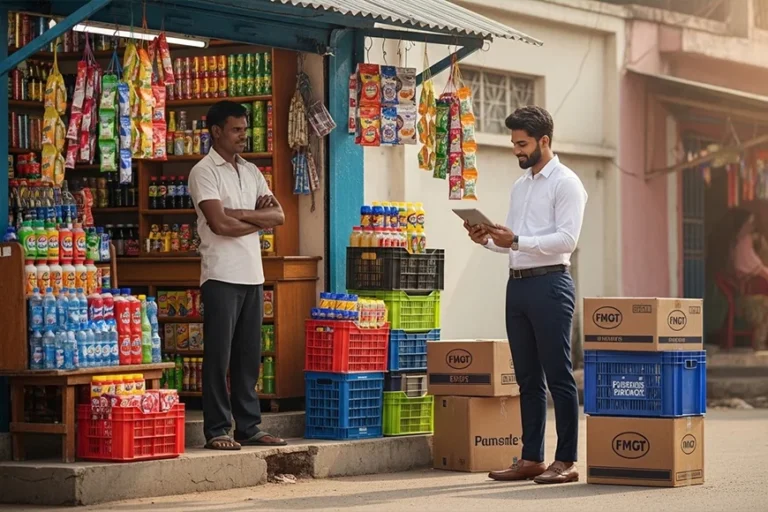
By the time a delivery vehicle leaves the warehouse, the order has already been booked. The order booker visited the store, the retailer agreed to the quantities, and the system shows a sale.
But the distributor hasn’t earned anything yet.
Revenue becomes real only when the right stock reaches the retailer, the invoice matches what was accepted, and the payment makes it back into the distributor’s books.
Everything between the warehouse and the retailer’s door is the last mile. For many FMCG distributors, it remains one of the least visible parts of the business, managed through printed route cards, phone calls, and manual cash ledgers.
When this process breaks down, the consequences go beyond delayed deliveries. They affect operating costs, cash flow, stock reconciliation, and retailer relationships.
So, what does effective last-mile delivery management look like, and how can distributors improve it?
What Is Last-Mile Delivery in FMCG Distribution?
In FMCG distribution, last-mile delivery is the final stage of the order-to-cash cycle: moving booked orders from the distributor’s warehouse to retail stores, collecting payments, and reconciling returns.
In a typical presell model, where orders are booked one day and delivered the next, the process involves six stages:
- Plan: Organize stores into routes and assign loads to vehicles.
- Load: Dispatch stock against the planned delivery orders.
- Deliver: Visit each retailer and hand over goods against an invoice.
- Adjust: Record returns, apply promotions, and account for partial deliveries.
- Collect: Receive payments against invoices, including partial payments where applicable.
- Settle: Reconcile collected cash, returned stock, and outstanding invoices at the warehouse.
Unlike e-commerce delivery, FMCG distribution involves frequent visits to the same retailers, with each stop carrying its own inventory and financial transactions. The deliveryman is responsible not just for moving products but also for collecting payments and recording exceptions.
That makes visibility and accuracy essential at every stage.
Where FMCG Last-Mile Operations Break Down
Last-mile problems are often routine rather than dramatic. But when small inefficiencies accumulate across hundreds of deliveries, they can have a significant impact on distribution costs and profitability.
1. Routes planned manually
When routes depend on paper cards and phone calls, delivery sequences may be inefficient, vehicle capacity may be poorly utilized, and supervisors spend time redirecting deliverymen instead of managing performance.
2. Deliveries that cannot be verified
Without reliable proof of store visits and completed deliveries, disputes become difficult to resolve. A retailer may report that an order never arrived, leaving the distributor with no dependable record to investigate.
3. Payment discrepancies at the counter
Deliverymen often have to calculate discounts, deduct returns, and account for partial payments manually. Errors create disputes with retailers and make cash reconciliation more complicated.
4. Returns without proper records
When returned stock comes back to the warehouse without item-level documentation or reasons, distributors struggle to reconcile inventory and verify whether invoice adjustments are correct.
5. Costs that remain invisible
Fuel consumption, inefficient routes, vehicle utilization, and delivery success rates are difficult to manage without consistent operational data. Without visibility into these metrics, distributors have limited insight into where money is being lost.
The common thread is a lack of reliable, real-time information. When field activities are recorded manually or reconstructed at the end of the day, managers spend more time investigating discrepancies than preventing them.
How Salesflo Go Digitizes FMCG Last-Mile Delivery
Salesflo Go is Salesflo’s mobile-first last-mile delivery platform, designed to digitize the process between a distributor’s warehouse and the retailer’s door.
It brings route planning, delivery verification, promotions, returns, cash collection, settlement, and operational reporting into a single mobile workflow.
1. Before Departure: Optimize Routes and Vehicle Loads
Effective delivery management starts before the vehicle leaves the warehouse.
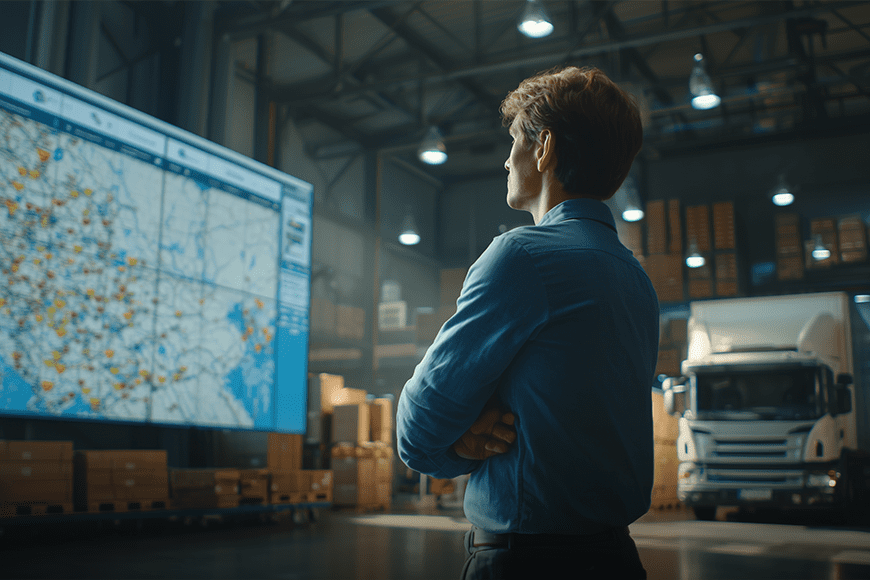
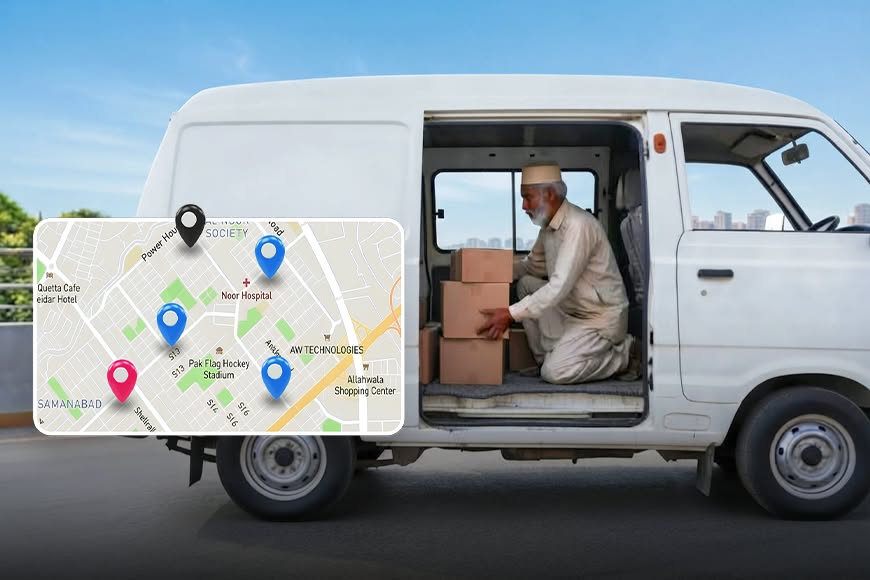
Salesflo Go’s route optimization algorithm clusters stores geographically, sequences stops to minimize total distance, and assigns loads based on vehicle capacity. Deliverymen can then follow guided routes rather than relying on paper route cards or directions from supervisors.
This helps distributors improve route efficiency, make better use of vehicle capacity, and reduce unnecessary travel.
2. At the Retailer: Verify Deliveries and Simplify Transactions
The retailer’s counter is where delivery execution, inventory adjustments, and financial transactions come together. Salesflo Go digitizes these activities within the deliveryman’s workflow.
Geo-verified deliveries
Store visits and completed deliveries are recorded through the app. Geo-fenced drop-offs help verify that a delivery is marked complete within the retailer’s designated location, giving managers a more reliable record of field activity.
Automated promotions and discounts
Applicable promotions and discounts are calculated at the point of delivery, with the net payable displayed on screen. This reduces manual calculations and helps both parties work from the same invoice amount.
Digital returns management
When a retailer rejects part of a delivery or returns products, the deliveryman can record the items and reasons in the app. This creates a documented record for warehouse reconciliation and reduces dependence on manual follow-ups.
Cash collection and partial payments
Salesflo Go records payments against invoices and calculates the outstanding balance after applicable returns and discounts. Partial payments are supported, with remaining balances carried forward to the retailer’s ledger.
Together, these capabilities help make transactions more consistent, transparent, and easier to reconcile.
3. After Delivery: Reconcile Cash and Monitor Performance
The last mile doesn’t end when the vehicle completes its route. Distributors still need to account for collected cash, returned stock, expenses, and outstanding balances.
Salesflo Go digitizes this final stage through three capabilities.
Digital settlement and store ledgers
Cash collected at each stop is recorded in the app, giving the distributor a consolidated view of the deliveryman’s cash position at the end of the run. Retailer ledgers provide a transaction history covering deliveries, returns, payments, and outstanding balances.
This makes settlement easier to verify and gives teams a shared record when resolving payment discrepancies.
Live fleet tracking
Supervisors can monitor deliverymen’s locations, current stops, and route progress. This visibility helps managers identify delays or deviations and intervene while there is still time to address potential missed deliveries.
Expense management and reporting
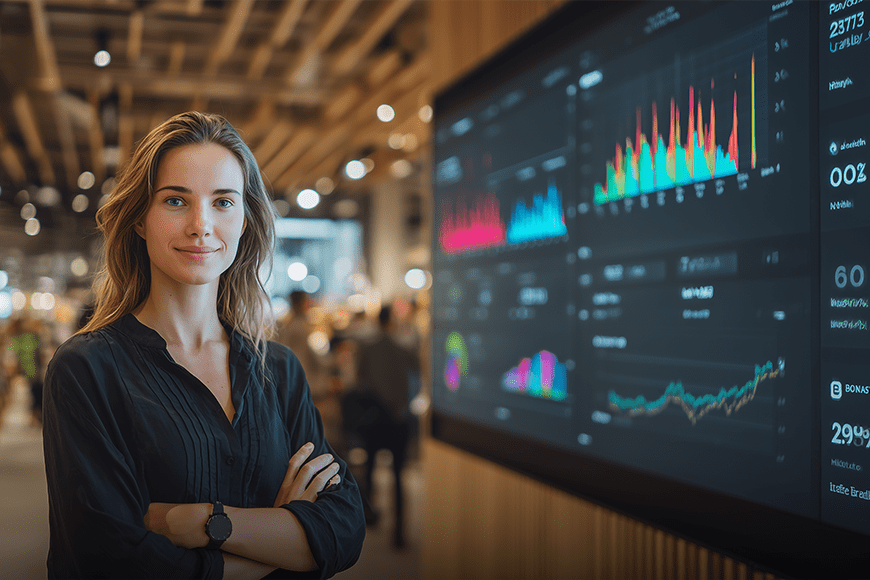
Deliverymen can record opening and closing meter readings, enabling fuel consumption to be tracked by vehicle and run. Managers can also review service levels, vehicle fill rates, delivery success rates, fuel consumption, and return patterns across vehicles, zones, and date ranges.
Rather than relying solely on end-of-month summaries, distributors gain a more consistent basis for reviewing performance and identifying operational inefficiencies.
What Changes When the Last Mile Goes Digital?
Digitizing last-mile operations is not simply about replacing paper forms with a mobile app. It changes how distributors monitor performance, resolve discrepancies, and control costs.
Three outcomes stand out:
- Greater financial control: Digital payment records, returns, and settlement workflows help reduce discrepancies and make outstanding balances easier to track.
- More efficient delivery operations: Optimized routes, vehicle utilization data, and fuel tracking help managers identify opportunities to improve delivery productivity and manage operating costs.
- Better retailer relationships: Accurate invoices, documented returns, and clearer payment records reduce avoidable disputes and help create a more consistent retail experience.
For FMCG distributors operating across large retail networks, these improvements can make daily operations more predictable and easier to manage.
Making Last-Mile Digitization Work
Even a capable delivery platform will fall short if field teams do not use it consistently. Successful implementation requires operational changes alongside the technology.
Replace paper workflows instead of duplicating them. If deliverymen must maintain both digital records and paper ledgers indefinitely, the app becomes an additional burden. Start with a defined set of routes, establish the new workflow, and phase out duplicate processes where appropriate.
Train teams on real delivery scenarios. Full deliveries with full payments are straightforward. Returns, promotions, partial payments, and invoice discrepancies require more attention. Training should focus on these situations so deliverymen can handle them confidently.
Make digital records part of daily management. Supervisors should use delivery reports, settlement records, and expense data to review performance and resolve issues. When managers rely on the system, field teams have a clearer reason to maintain accurate records.
The objective is to make the digital workflow the natural way to complete a delivery, not another task added to an already busy day.
Frequently Asked Questions
What is last-mile delivery in FMCG?
Last-mile delivery is the final stage of FMCG distribution, covering the movement of booked orders from the distributor’s warehouse to retailers, along with invoicing, returns, payment collection, and settlement.
What is Salesflo Go?
Salesflo Go is a mobile-first last-mile delivery platform that digitizes route planning, store visits, delivery verification, promotions, returns, cash collection, settlement, and operational reporting.
How does Salesflo Go improve delivery efficiency?
It supports route optimization, vehicle load planning, guided navigation, and live fleet tracking, helping distributors improve route execution and monitor delivery performance.
Can Salesflo Go manage cash collection and returns?
Yes. The platform supports digital returns recording, promotion and discount calculations, partial payments, retailer ledgers, and end-of-run settlement.
How can distributors measure last-mile performance?
Distributors can monitor metrics such as delivery success rates, vehicle fill rates, fuel consumption, service levels, and return patterns to identify inefficiencies and make better operational decisions.
Delivery Is Where the Sale Gets Finished
Order booking gets much of the attention in FMCG distribution because it is where a sale begins. But a distributor’s margins, cash position, and retailer relationships are shaped by what happens next: on the route, at the counter, and during settlement.
When the last mile runs on paper, phone calls, and manual calculations, costs and discrepancies can easily go unnoticed.
Digitizing these operations gives distributors greater visibility into delivery execution, more control over financial transactions, and a clearer understanding of operational performance.
Salesflo Go helps bring these activities into one connected workflow, giving FMCG distributors the visibility and control they need to turn booked orders into successfully delivered, accounted-for sales.