The Invisible Giant of Global Commerce
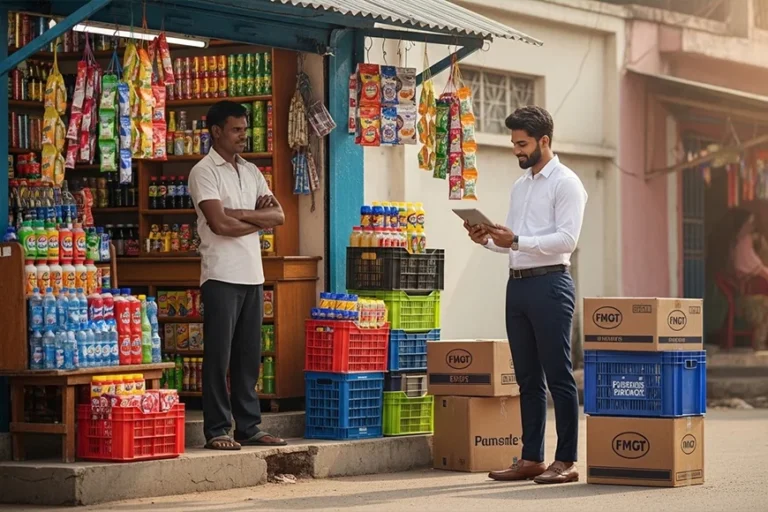
Despite the global fascination with “Modern Trade”, shiny e-commerce apps, and complex omnichannel strategies, the heartbeat of emerging markets isn’t found in a shopping mall or a fulfillment center. It is found in the Kiryanas of Pakistan, the Sari-sari stores of the Philippines, the Dukas of East Africa, and the Spazas of South Africa.
Traditional Trade remains the primary revenue driver for brands in emerging economies. From Southeast Asia to Africa and the Middle East, these small retailers and informal channels collectively account for 60–70% of total sales for Fast-Moving Consumer Goods (FMCG). In some regions, that number climbs as high as 90%.
Yet, despite its scale, traditional trade is frequently sidelined in digital transformation conversations. While e-commerce grows, the sheer density and cultural integration of traditional retail make it an immovable force. For brands, the challenge isn’t moving away from traditional trade – it’s learning how to digitize it.
1. The Scale of Traditional Trade: Numbers Don’t Lie
Traditional trade isn’t “old-fashioned”; it is a hyper-localized, resilient, and highly efficient ecosystem of independent stores and wholesalers. Consider the sheer density:
- India: Over 12 million small retailers form the backbone of the economy.
- Nigeria: Informal retail accounts for over 80% of consumer purchases.
- Indonesia: Warungs (family-run kiosks) contribute nearly 70% of retail sales.
For billions of consumers in rural or peri-urban areas, traditional trade is the only viable way to access daily essentials. These stores offer proximity, credit (khata), and extreme broken-bulk purchasing that supermarkets cannot match.
Bottom Line: Growth in emerging markets is mathematically inseparable from traditional trade success. If you aren’t winning at the corner store, you aren’t winning the market.
2. The Paradox: High Volume, High Complexity
If traditional trade is so lucrative, why is it such a headache for FMCG leadership? The very traits that make it resilient also make it difficult to manage at scale. Brands face four “Black Box” challenges:
- Fragmentation at Scale: Managing ten supermarket chains is easy; managing 100,000 independent retailers is a logistical nightmare.
- The Data Void: Sales and inventory data often rely on manual “pen and paper” reporting by distributors or field agents, leading to delayed or inaccurate insights.
- Execution Gaps: Without “eyes on the shelf,” promotions aren’t implemented, pricing is inconsistent, and “Out of Stock” rates skyrocket.
- High Cost-to-Serve: The manual nature of van sales or order-taker models means reps spend more time on administration than selling.
3. Digitizing the “Un-digitized”: How Leaders Win
Successful brands have realized that you cannot force traditional retailers to act like modern ones. Instead, the key is to wrap technology around the existing ecosystem.
Smart strategies include:
- Real-Time Field Reporting: Tools like Salesflo Engage allow field teams to report stock levels, promotions, and merchandising in real time, replacing manual logs with instant visibility.
- Execution Monitoring: With Engage, managers can track compliance, receive alerts on empty shelves or missed promotions, and guide reps proactively—reducing errors before they affect sales.
- Empowering the Field: Rather than policing reps, Engage equips them with a platform to share insights, communicate priorities, and focus on building relationships, turning every store visit into actionable intelligence.
4. Turning Complexity into a Competitive Advantage
The brands that thrive in traditional trade see complexity not as a barrier, but as a moat. Real-time communication platforms transform the relationship between the brand and the retailer:
- Transparency: Managers can see exactly what is happening in the field at any given moment.
- Productivity: Automation reduces administrative overhead, letting reps spend more time selling.
- Agility: Rapid response to issues—whether stock shortages or promotional lapses—becomes possible across thousands of stores.
By integrating a solution like Salesflo Engage, brands can convert fragmented field operations into a cohesive, data-driven engine.
5. Looking Ahead: The Future is “Phygital”
The narrative that e-commerce will eventually “kill” the corner store is a myth. Traditional stores are evolving into delivery hubs, and digital payment systems make micro-retailers more bankable.
Brands that dominate 2026 and beyond will:
- Treat traditional trade as a strategic asset and rich data source.
- Invest in execution excellence, not just product quality.
- Empower the field with technology that acts as a superpower rather than a policing tool.
Traditional trade is the backbone of growth. Platforms like Salesflo Engage provide the digital nervous system that makes this massive physical ecosystem manageable, visible, and actionable. Brands that master these insights gain a clear competitive advantage and are poised to capture the next billion consumers.